English
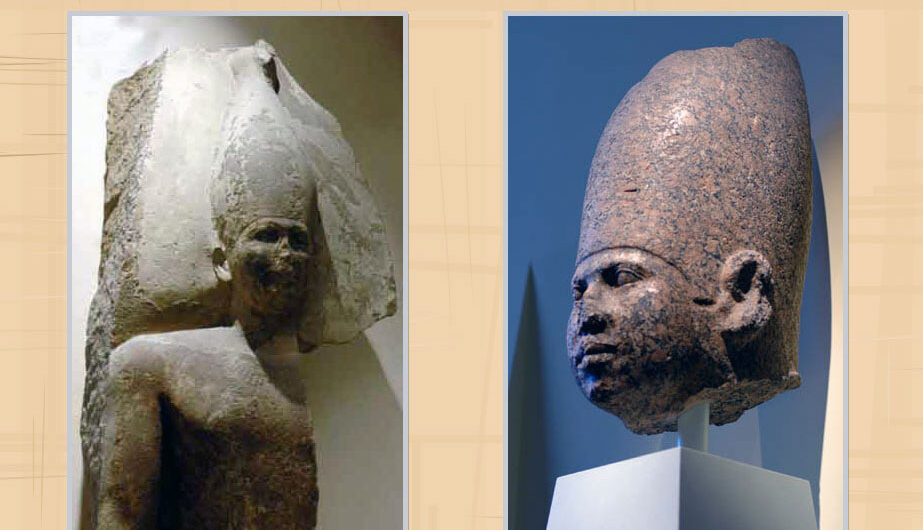
Who Was King Sneferu?
King Sneferu was one of the most important rulers of Egypt's Fourth Dynasty and played a major role in the development of pyramid architecture.
He ruled during the Old Kingdom, around 2613–2589 BC, a period when royal power, architecture and monumental construction were developing rapidly. His reign is particularly significant because three major pyramid projects are associated with him: the pyramid at Meidum and the Bent and Red Pyramids at Dahshur.
Rather than being remembered for a single monument, Sneferu's legacy is closely connected with the evolution of pyramid construction itself.
Sneferu and the Golden Age of Pyramid Building
The reign of Sneferu represents an important stage in the transition from earlier step-pyramid designs toward the smooth-sided pyramids that became the defining monuments of ancient Egypt.
The architectural experiments carried out during his reign helped develop techniques that would later reach an extraordinary level of scale and precision during the reign of his son, King Khufu.
His pyramids therefore provide an important chapter in the story of how Egyptian pyramid architecture evolved.
The Pyramid of Meidum
One of the monuments associated with Sneferu is the Pyramid of Meidum, located south of Cairo.
The monument began as a step pyramid and was later transformed into a true pyramid with smooth sides. The Egyptian Ministry of Tourism and Antiquities describes Meidum as an important site for understanding the development of pyramid-building techniques during Sneferu's reign.
Today, much of the original outer structure has disappeared, leaving a distinctive central core surrounded by the remains of the monument.
Although its present appearance is very different from the original pyramid, Meidum remains an important archaeological site for understanding the development of ancient Egyptian architecture.
The Bent Pyramid at Dahshur
Sneferu's next major architectural project was the Bent Pyramid at Dahshur.
The pyramid is famous for its unusual shape. Its lower section rises at approximately 55 degrees, before the angle changes to around 43 degrees toward the upper section. This change created the distinctive appearance that gave the monument its modern name.
The change in angle is generally understood as an architectural response to structural concerns during construction.
Rather than abandoning the project, the builders modified the design and completed the monument, making the Bent Pyramid an extraordinary example of experimentation in ancient Egyptian engineering.
Why Is It Called the Bent Pyramid?
The name "Bent Pyramid" comes from the visible change in the angle of its sides.
The monument is particularly fascinating because visitors can see evidence of an important stage in the development of smooth-sided pyramids.
The Egyptian Ministry of Tourism and Antiquities notes that the pyramid represents a transitional stage between the earlier step-pyramid tradition and later smooth-sided pyramid architecture.
The Red Pyramid
After the Bent Pyramid, Sneferu constructed another major pyramid at Dahshur: the Red Pyramid.
The Red Pyramid gets its modern name from the reddish color of its exposed limestone blocks. Originally, the pyramid was covered with white Tura limestone casing, as was common with Egyptian pyramids.
The Red Pyramid is considered one of the most important achievements of Sneferu's architectural program and is generally regarded as the first successfully completed true pyramid in Egypt.
It stands as a major milestone in the development of the classic pyramid shape that would later be perfected on an even larger scale at Giza.
Why Is the Red Pyramid Important?
The Red Pyramid demonstrates how Egyptian builders continued to improve their architectural techniques after the challenges encountered at earlier monuments.
Its more consistent angle and stable design created the familiar smooth-sided pyramid form.
According to the Egyptian Ministry of Tourism and Antiquities, the Red Pyramid is the highest pyramid at Dahshur and is the third-largest Egyptian pyramid after the pyramids of Khufu and Khafre at Giza.
Dahshur: The Land of Sneferu's Pyramids
Dahshur is one of the most important archaeological areas for understanding the development of Egyptian pyramids.
The site was part of the wider Memphis cemetery and contains pyramids from different periods of ancient Egyptian history. Sneferu selected the rocky plateau of Dahshur for major pyramid projects, creating monuments that would become central to the history of pyramid architecture.
Today, visiting Dahshur offers travelers an opportunity to see a different side of Egypt's pyramid landscape away from the better-known monuments of Giza.
Sneferu's Contribution to Egyptian Architecture
Sneferu's greatest legacy was not simply the number of pyramids connected to his reign.
His building projects represent a period of experimentation, problem-solving and architectural development.
From the transformation of Meidum to the unusual design of the Bent Pyramid and finally the successful form of the Red Pyramid, the monuments associated with Sneferu illustrate how ancient Egyptian builders developed increasingly sophisticated approaches to monumental construction.
Sneferu and the Pyramids of Giza
Sneferu's architectural achievements also provide important context for the pyramids at Giza.
His son, King Khufu, later built the Great Pyramid at Giza. The architectural knowledge and experience developed during Sneferu's reign formed part of the broader tradition that preceded the construction of the Great Pyramid.
This makes Sneferu an important figure when exploring the history of Egypt's most famous pyramids.
The Legacy of King Sneferu
Thousands of years after his reign, Sneferu remains one of the most fascinating pharaohs of ancient Egypt.
His monuments tell a story of architectural experimentation and gradual progress. Instead of representing a single moment of achievement, the pyramids associated with Sneferu reveal a process through which Egyptian builders developed the techniques needed to create the classic pyramid form.
Why Visit Sneferu's Pyramids?
For anyone interested in ancient Egyptian history, the pyramids of Sneferu offer a unique opportunity to see how pyramid architecture evolved.
Meidum reveals an early stage of development, the Bent Pyramid demonstrates an unusual architectural solution, and the Red Pyramid represents a major step toward the smooth-sided pyramids that later became famous at Giza.
Together, these monuments create a fascinating story of innovation, engineering and royal ambition.
Final Thoughts
King Sneferu occupies a special place in the history of ancient Egypt. His reign was closely connected with some of the most important developments in pyramid construction.
From Meidum to the Bent Pyramid and finally the Red Pyramid at Dahshur, Sneferu's monuments show the evolution of Egyptian architecture over time.
Long before the Great Pyramid of Giza was built, these monumental projects helped establish the architectural traditions that would define the great pyramid age of ancient Egypt.